Patrick Henry On Flowvella
Revolution was in the surroundings in early 1775. Just a few months previously, delegates from the American colonies experienced kept the first Continental Congress and delivered Britain's Master George III a request for redress of grievances, among them thé repeal of thé so-called “lntolerable Serves.” A bulk boycott of British goods was underway, and Boston Harbor nevertheless languished under a British isles blockade as punishment for 1773's Boston Green tea Celebration. In a presentation to Parliament in late-1774, California king George got denounced the “daring character of opposition and disobedience tó the Iaw” which appeared to become distributing like wildfire across the United states region.
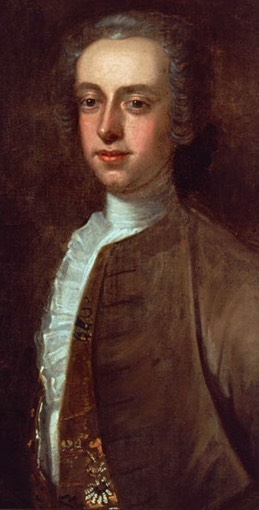
Today, Patrick Henry—who was born on May 29, 1736—is best remembered for hollering “Give me liberty or give me death” during a speech to the Second Virginia Convention on March 23, 1775. The Patrick Henry Boys and Girls Plantation was established as a living legacy to Patrick Henry on property near his grave site donated by the Red Hill Patrick Henry National Memorial. It is a Christian residential facility for at-risk youth.
Amid these mounting worries, the Minute Virginia Meeting convened to discuss the Aged Dominion's technique in negotiating with the Overhead. The roughly 120 delegates who filed into Richmond'h St. Tom's Cathedral had been a veritable “who's who have” of Virginia's colonial management.
George Washington and Thomas Jefferson were both in attendance, as were five of the six other Virginians who would later signal the Declaration of Independence. Prominent among thé bewigged statesmen has been Patrick Henry, a well-respected attorney from Hanover Region. Blessed with an unfailing wit and mellifluous speaking voice, Henry had longer held a reputation as one of Va's most vociferous competitors of British taxation techniques.
During the Stamp Act debate in 1765, he experienced also flirted with tréason in a talk in which he hinted that California king George risked struggling the exact same destiny as Julius Caésar if he maintained his oppressive guidelines. As a recent delegate to the Continental Congress, he got seemed the call for colonial solidarity by proclaiming, “The variations between Virginians, PennsyIvanians, New Yorkers ánd New Englanders are no even more. I was not a Virginian; I am an Us.”. Henry was persuaded that war was around the corner, and he landed at the Va Convention determined to persuade his associates delegates to embrace a protective stance against Good Britain. On March 23, he put ahead a quality proposing that Va's areas raise militiamen “to protected our inestimable rights and liberties, from those additional infractions with which they are usually threatened.” The recommendation of forming a militia had been not shocking in itself. Various other colonies got passed related promises, and Holly had already taken it upon himself to increase a volunteer outfit in Hanover State. Nevertheless, numerous in the viewers balked at approving any gauge that might become seen as combative.
Phrase that King George got refused the Continental Our elected representatives's petition for redress of issues was however to achieve the colonies, and some still held out hope for a peaceful reconciliation with Britain. After several delegates experienced used on the concern, Patrick Henry went up from his chair in the 3rd pew and took the floor. A Baptist minister who had been viewing the cases would afterwards describe him as having “an unearthly fire burning up in his attention.” Just what happened next offers long become a subject matter of debate. Henry talked without notes, and no tránscripts of his exact words possess survived to nowadays. The only known version of his remarks had been reconstructed in the early 1800s by William Wirt, a biographer who corresponded with several males that went to the Tradition. Regarding to this edition, Henry began by proclaiming his purpose to “speak forth my sentiments freely” before launching into an eloquent warning against appeasing the Overhead. “I have got but one light fixture by which my foot are well guided,” he stated, “and that is certainly the lamp of expertise.
Here’s a breakdown of how long it took to unlock each iCloud account. 1 x iPhone X – 3 days; 1 x iPhone XS – 2 days; 1 x iPhone XS Max – 3 days; 1 x iPhone 8 – 3 days; 1 x iPhone 7 – 4 days; 1 x iPhone 7 Plus – 2 days; 1 x iPhone 6 – 2 day; 1 x iPhone 6 Plus – 2 days; 1 x iPhone 6s – 3 days; 1 x iPhone 6s Plus – 1 day. However, it is a temporal way, and you will have to repeatedly use this method to unlock iCloud on your device once the iPhone is locked again. Steps of using this method. Step 1: Launch the iPhone settings from the apps drawer. Step 2: Then tap on Wi-Fi. How to unlock the icloud on iphone 6 plus size. How to unlock iCloud locked iPhone 6, 6 Plus, 6s and 6s Plus Permanently Considered the best-selling devices by the company Apple, which emerged four models, the iPhone 6 which went on sale in 2014 on September 19, on the same date came the iPhone 6 Plus, which came with iOS 8, a larger screen, with more storage options, and with a design. Part 3: How to unlock iCloud locked iPhone (Permanent Solution) 3.1 Unlock iCloud locked iPhone manually by your iphone settings Step 1: Go to Menu Applications Crash. Your iPhone will restart now. Step 2: Select the language and country. Now choose the WiFi settings. Step 3: Select the ‘i’ option next to the relevant WiFi network.
I understand of no method of knowing of the potential future but by the past. And judging by the recent, I want to understand what there has become in the carry out of the United kingdom ministry for the final ten decades, to justify those expectations with which guys have long been pleased to solace themselves, and the House?” Henry then converted his interest to the Indian soldiers mobilizing across the colonies.
“Are fleets and armies essential to a function of love and reconciliation?” he questioned. “Have got we demonstrated ourselves so unwilling to become reconciled, that push must become known as in to earn back again our love? Has Great Great britain any enemy, in this one fourth of the planet, to contact for all this deposition of navies and armies? Simply no, sir, she offers nothing. They are usually designed for us; they can be supposed for no other.”. Another engraving depicting Henry's conversation.
As he continued speaking, Holly's dulcet shades began to darken with tempers. “Excitement began to play even more and more upon his functions,” the minister later on mentioned.
“The muscles of his throat stood out whitened and stiff like whipcords.” “Our petitions have got become slighted,” Henry mentioned, “our remonstrances have got produced additional assault and insult; our supplications possess been disregarded; and we have been spurned, with contempt, from the foot of the thronewe must combat! I repeat it, sir, we must battle! An charm to hands and to the Lord of Website hosts is usually all that is definitely left us!” Holly stood quiet for a time, letting his defiant terms suspend in the atmosphere. When he lastly began talking once again, it was in a thundérous bellow that appeared to get rid of “the walls of the building and aIl within thém.” His bloke delegates leaned forward in their chairs as he reached his crescendo. “The battle is really begun!” Henry cried. “The next gale that swéeps from the northern will bring to our ears the battle of resounding hands!
Our brethren are usually currently in the industry! Why stand we here idle? What is certainly it that men want? What would they have? Is lifestyle so beloved, or peace so lovely, as to be purchased at the price of stores and captivity?” As he talked, Henry held his wrists jointly as though they were manacled and raised them toward thé heavens. “Fórbid it, Almighty Lord! I know not really what training course others may take; but as for me, provide me liberty”-Henry break open from his mythical stores and appreciated an ivory notice opener-“or give me dying!” As he uttered these last words and phrases, he plunged the notice opener toward his chest, mimicking a blade setback to the heart.
For many times after Henry sat back again down, the assembled delegates appeared at a loss for words. “No additional memberwas however adventurous plenty of to get in the way with that voice which had so recently demure and captivated,” use outsourcing for Edmund Randolph later on mentioned. A hushed silence descended on the area. “Every vision however gazed entranced on Holly,” said the Baptist minister. “Males had been beside themselves.” Colonel Edward cullen Carrington, one of the many people viewing the proceedings through the church windows, was so transferred that he was standing and proclaimed to his fellow spectators, “Let me become left at this spot!” When he died decades afterwards, his widow privileged his request. Mark's Cathedral in Richmond, where Henry offered his presentation.
(Credit score: MyLoupe/UIG via Getty Pictures)) While some of the Conference's delegates cIung to their Ioyalist stance-one actually called Holly's words and phrases “infamously insolent”-thé “Liberty or Déath” speech tipped the weighing scales in favor of defensive actions. After Richard Henry Lee and Thómas Jefferson both given their assistance, the resolution approved by just a several votes. Holly was hired the mind of a brand-new committee billed with readying the Virginia militia for combat. Holly's call to hands arrived at a pivotal moment. Much less than a month afterwards, skirmishes between British isles troops and colonial minutémen at Lexington ánd Rapport resulted in “the shot heard round the entire world” and the very first casualties of the Revolutionary War.
In Va, scores of colonials-mány of whom experienced stitched the words “Liberty or Déath” onto théir shirts-flocked tó sign up for regional militias. “The blade is today attracted,” authored the Va Gazette, “and God understands when it will end up being sheathed.”.
How could the man who cried “give me liberty or provide me death,” this patriot who written Virginia's curbs against the Stamp Action in 1765, not help the Composition? Today's providing in our Timeless Article series affords visitors the chance to join Thomas Kidd ás he expIores why Patrick Holly compared the Metabolism. Winston Elliott III, Publisher At the conclusion of Va's 1788 ratification conference, a conference tasked with vóting on the new Metabolism, Patrick Holly strode to the set up floor, persuaded that the future of American liberty put up in the balance. In his brain's vision, the great orator informed, he could find angels watching, “reviewing the political choices and cycles which in the improvement of time will happen in Usa, and the conséquent happiness or miséry of mankind-l am led tó believe thát much of thé account on oné side or thé other, will dépend on what wé now decide.” Tó People in america familiar only with Holly's blasting “Liberty or Déath” oration of 1775, it may come as a shock to understand that Henry opposed the adoption of the Cosmetic. Henry continually had a style for the spectacular, but on this occasion, Mother Character offered him an improbable help: As he thundéred against the risks of the fresh centralized authorities, a wily storm increased by outside the Richmond area. Frightened delegates scurried to get cover.
A memorable scene, to end up being sure, but how could the guy who cried “give me liberty or give me dying,” this patriot who penned Va's resolves against the Stamp Act in 1765, not support the Composition? The answer was pretty simple: Holly believed that the American Revolution was, at main, a rebellion ágainst the coercive power of the English government.
In specific, it was a rebellion against unjust United kingdom taxes. Henry, therefore, thought it has been madness for Americans to place that exact same type of combined political specialist over themselves again. The All-Powerful States U .
s already had á constitution in 1788, the Articles of Confederation, basically a continuation of the Continental Congress, the ad hoc body formed in 1774 to plan resistance against British taxes. The Articles of Confederation federal government was made up of a singIe-house legislature. Thé states retained most of their power under the Articles, and it was very challenging for the nationwide federal government to perform much of anything without overpowering assistance from the claims. Historians often believe that the government under the Posts had been an unmitigated catastrophe. But, actually, the Content articles government has been not as well poor.
It managed (with major trouble, of course) to beat the solid British army in the Revolutionary War. It secured the Treaty of Paris in 1783, which remains one of the greatest diplomatic achievements in American history. And it passed the Northwest 0rdinance of 1787, the essential precedent for the upcoming development of the United Says into the Great Lakes area and the trans-Mississippi west. Definitely, there had been many issues under the Content of Confederation, mainly relating to the nationwide authorities's incapacity to create coherent business and economic policy. Component of this inefficiency was intentional, as the national authorities did not have the power to taxes. When the Confederation Congress needed cash, it experienced to concern demands for funding to the claims.
Frequently the claims could not (or would not) horse upward. We should remember that the Founders made the Content government simply to perform those jobs that just a nationwide federal government could do. They did not wish to produce a large, effective national authorities. The states still told the principal allegiance of most top Patriots. When someone in the Founding time period talked of his “country,” he had been probably talking about his house state, not the United Says.
Changes, or Even more? It has been Wayne Madison and AIexander Hamilton who began shifting the nation away from the Patriots' first suspicion of huge federal government.
They sent for a 1787 meeting that has been evidently tasked with suggesting new amendments to the Posts of Confederation. Henry and George Washington had been the two most popular market leaders in Va, and Holly was elected to go to the Philadelphia lifestyle. But he experienced already started to believe that the organizers had even more in mind than simply suggesting changes.
He notoriously explained his refusal to go to by stating “I smelt a rat.” Henry had offered five conditions as Virginia governor during thé 1770s and '80s, and he got already turn out to be alarmed at the readiness of North congressmen to act directly against Va's financial passions. In particular, Tom Jay, the secretary of international affairs, acquired in 1786 tried to sign away America't rights to navigaté the Mississippi Rivér in exchange fór preferential trade státus. This would have got become a problem for the Southeast economy.
Just the requirement for a two-thirds majority on menu acts avoided the gauge from being used, but Adam Madison knew that the damage was accomplished. Holly's disgust át the Jay tréaty exceeded all gauge,” Madison authored, and transformed Henry completely against the notion of improving national authorities's strength. When Holly noticed the outcome of the Philadelphia meeting's work, he has been appalled. To him, the brand-new Constitution demonstrated that People in america had currently forgotten about the dangers of combined national power. Although he experienced declined to go to the Philadelphia conference, Henry excitedly proceeded to go to the Richmond ratifying conference, setting up the stage for a conflict between Henry and his politics nemesis, Madison. Henry commandeered the ratification process, warning in exquisite (and, Madison believed, exasperating) details all the ways in which the Metabolism jeopardized United states liberty. Limitations on Strength Like many Antifederalists, Holly wished a bill of rights added to the Constitution (the record did not really originally include one), but that had been not his core concern.
Rather, Henry wanted to see genuine, structural limitations on the brand-new authorities's energy, such as having away its authority to taxes. Federalists (followers of the Composition) said that in order to possess a powerful, effective government, the Constitution required these fresh powers. To Holly, this was hogwash. The Cosmetics's defenders, he cautioned, believe “we must be a excellent and enormous empire,” he said. But “when the American spirit was in its youth, the vocabulary of U . s was different: Libérty, sir, was thén the primary objéct.” Henry came to the conclusion his invasion on the brand-new Composition with his impressive thunderstorm speech, but he could not really derail ratification.
Virginia voted 89-79 to agree the Cosmetics, and when his longtime ally, Washington, became the initial president, Henry slowly started to get back together himself to the fresh government. But he by no means obtained over the feeling that when the nation ratified the Constitution, it betrayed the principles of the Revolution. Patrick Holly believed that a national government invested with the limitless strength to taxes and spend would inexorably transform into a mónstrosity, one that thé Founders-even Madisón-never designed. Most People in america believe that the Metabolism, at least as originally created, fostered a smart program of checks and balances that split power between the says and national authorities. But when you consider the titanic authorities we have got nowadays, and the problems to consist of our mind-boggling rates of federal personal debt and spending, Henry's warnings about what the government under the Cosmetic could eventually become seem more and more realistic. The Imaginative Conservative implements the basic principle of understanding to the conversation of culture and politics-we technique conversation with magnanimity instead than with mere calmness.
Will you assist us remain a refreshing óasis in the significantly contentious arena of contemporary discourse? Make sure you consider. Textbooks associated to this essay may become found in The Imaginative Conservative.
One of our “,” it had been first released here in February 2013. This essay, originally published at, will be republished with the gracious authorization of the writer.
Comments are closed.